
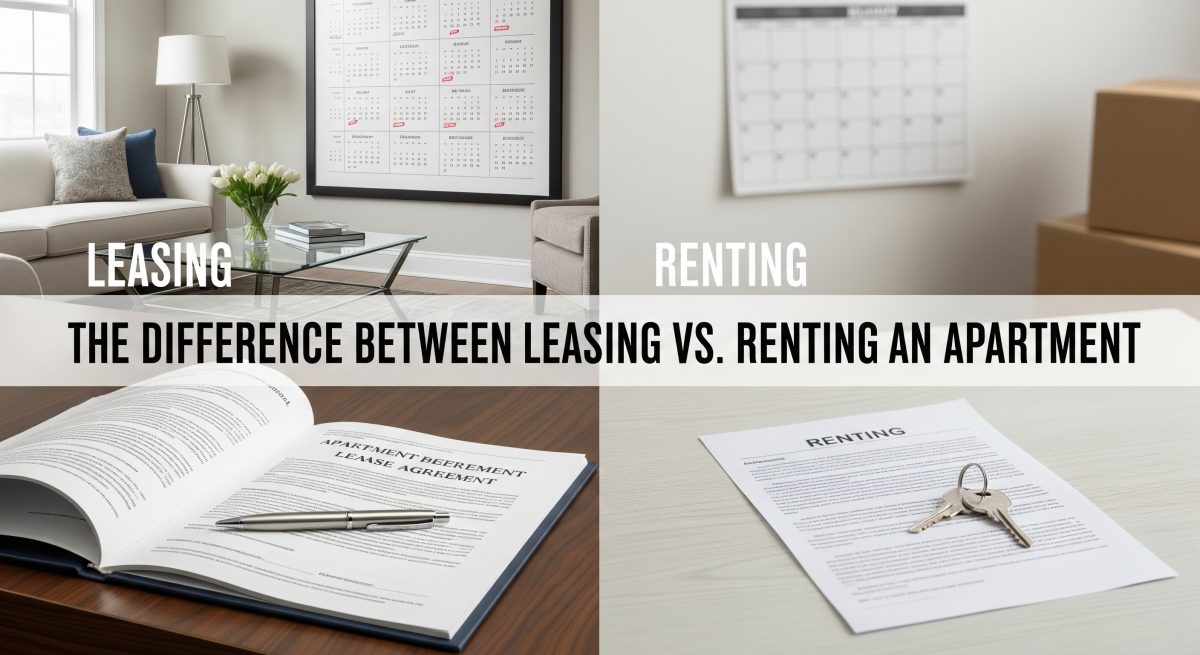
When it comes to securing a place to live, understanding the difference between leasing and renting is essential. While these terms are often used interchangeably, they have distinct implications for tenancy duration, flexibility, and financial commitment. Renting usually refers to short-term arrangements, often month-to-month, whereas leasing involves long-term agreements, typically six months to a year or more. In this article, we’ll break down the key differences to help you decide which option is best for you.
What Does Renting Mean?
Renting an apartment or house means securing a place to live by paying monthly rent. The renter (or tenant) does not own the property but has the right to occupy it under the terms of the rental agreement. Rentals are often short-term, providing flexibility for tenants who may need to move frequently.
What Does Leasing Mean?
Leasing is similar to renting but involves a longer commitment. Tenants agree to stay for a specific duration, often a year or more, with fixed terms and payment schedules. Lease agreements typically include stricter rules and responsibilities compared to short-term rentals, offering more stability but less flexibility.
Renting vs. Leasing: Key Differences
| Factor | Renting | Leasing |
|---|---|---|
| Duration | Short-term, usually month-to-month | Long-term, often 12 months or more |
| Flexibility | High; tenants can leave with 30–60 days notice | Low; breaking a lease can incur penalties |
| Payment Terms | Monthly payments | Monthly or annual; may include security deposits upfront |
| Renewal Options | Automatic unless notice given | Requires renegotiation or vacating at lease end |
| Property Modifications | Limited or none without landlord approval | Minor modifications allowed with permission |
| Maintenance Responsibilities | Usually landlord handles major repairs | Varies; tenant may handle small tasks like changing bulbs |
| Legal Implications | Governed by rental laws favoring tenants | Governed by local, state, and federal lease laws |
| Use of Property | Primarily residential | Residential or commercial |
| Security Deposit | Usually one month’s rent | Often required, can vary significantly |
| Termination | Can terminate with notice | Early termination can result in penalties |
How to Decide What’s Best for You
1. Understand the Terms
Before making a choice, review the rental or lease terms carefully. Determine which option aligns with your lifestyle, financial situation, and housing needs.
2. Consider Your Time Frame
Renting is ideal for short-term stays (1–3 months), while leasing is better for long-term commitments (1–4 years).
3. Think About Rent Increases
Renting may involve frequent rent adjustments based on market conditions. Leasing locks in your rent for the duration, offering financial predictability.
4. Costs and Fees
Renting usually has lower upfront costs, while leasing may require security deposits, first and last month’s rent, and other fees. Leasing provides clarity on long-term expenses.
5. Legal Considerations
Leases offer detailed legal protections for both tenants and landlords. Rentals are flexible but may provide fewer protections. Always read agreements thoroughly before signing.
6. Lifestyle and Flexibility
Renting suits those who need flexibility and freedom to move on short notice. Leasing is perfect for tenants seeking stability and long-term housing.
Decision Time
Your choice between renting and leasing depends on your priorities. If you value flexibility, renting is ideal. If stability and a longer commitment are your goals, leasing is the way to go.
How Raj Properties Can Help
Whether you’re looking to rent or lease, Raj Properties provides expert guidance to find the right property for your needs. Our team manages all aspects of property operations, ensuring a smooth experience for both tenants and property owners.
From short-term rentals to long-term leases, we help you navigate the real estate market with ease. Please contact us today to explore your options and make informed decisions.